
To break free from toxic family beliefs, you don’t need to fight your family. You need to replace the old rules you absorbed in childhood with new ones that put your own worth back on the list. Below are 13 shifts, each paired with the belief it replaces, for women and adult daughters shaped by critical, difficult or emotionally distant parents.
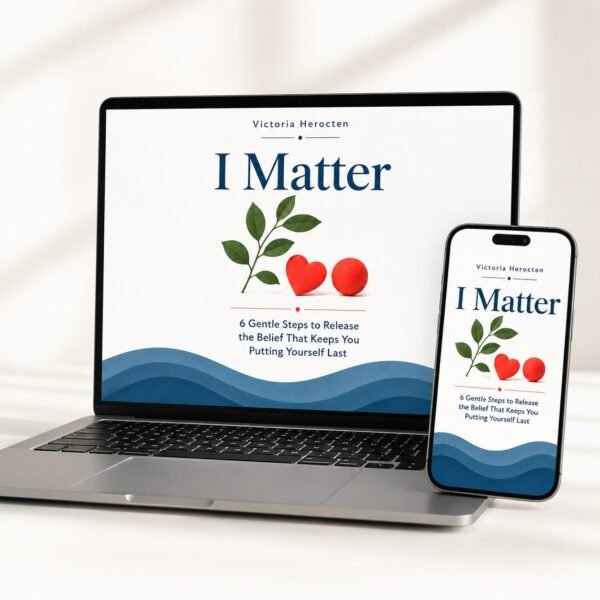
From Victoria: In conversations with friends, I noticed how common one belief was: “I can’t put myself first, or I’ll be punished.” It also seemed to have the biggest emotional impact on their lives. For a long time, I struggled with this belief myself. After trying many methods, on myself and while supporting other women, one particular combination started to work. Some of those tools are now part of the I Matter Alignment masterclass.
Why changing family beliefs starts with awareness
If you’ve read my previous articles, you already know how damaging toxic family beliefs can be — especially when they’ve been ingrained since childhood. In those posts, we identified the 13 most common beliefs that keep middle-aged women stuck in dysfunctional family patterns.
But awareness is just the first step. Once you’ve spotted those beliefs, the next question is: What do I do instead?
This article is your answer. These 13 empowering shifts will help you replace limiting patterns with new perspectives that support your well-being, self-worth, and independence. There are no complicated step-by-step instructions here — just clear direction on where to put your focus and how to think differently.
“At Awaken Happy Life, we guide middle-aged women on a holistic journey to break free from limitations and grow into powerful, confident selves.”
If you’re ready to live by new rules, let’s start.
Shift 1: Recognise Your Right to Prioritise Yourself
Do you remember this belief:
“Taking care of my old parents is necessary because they did it for me in my childhood.”
Instead of believing your parents’ needs must always come first, start by affirming that your life is just as important as anyone else’s. This doesn’t mean neglecting loved ones — it means refusing to live in constant self-sacrifice. When you prioritise your health, rest, and dreams, you stop running on empty and start showing up sustainably.
Shift 2: Value Yourself Beyond What You Do for Others
Let’s check if this belief is your reality:
“My worth depends on how much I do for my family.”
Your worth is not measured by the hours you spend cooking, organising, or fixing everyone’s problems. It comes from who you are, not what you can provide. Begin by acknowledging your qualities, interests, and talents — things that exist even when you’re not “helping.” This shift frees you from the exhausting cycle of overgiving and allows you to nurture your own life without guilt.
Shift 3: Speak Your Truth Without Apology
Keeping the peace by swallowing your words may avoid conflict in the short term, but it slowly erases your voice. Instead, practice stating your needs, opinions, and feelings clearly — without lengthy justifications. Speaking up doesn’t have to be confrontational; it’s simply allowing yourself to exist entirely in your relationships. Your truth deserves space, even if others find it uncomfortable.
In this case, you need to train a new habit. My article 3 Tools to Stop Excuses shows how to start replacing old habits. Now, if this scenario fits your current life situation, realise the destructive power of not being authentic.
Shift 4: Define Family by Love, Not Blood
Many middle-aged women believe in this:
“The blood in the family is thicker than anywhere else, so I should stay even around abusive people”
Biological ties alone don’t guarantee safety or respect. Instead of staying loyal to relatives who harm you, define family as those who treat you with kindness, consistency, and care. Choosing love over blood doesn’t make you disloyal — it makes you discerning. This shift opens the door to healthier, more supportive connections that genuinely feel like home.
Shift 5: Approve of Yourself First
If you’ve spent years chasing your parents’ approval, it’s time to turn inward. Start recognising your achievements and giving yourself credit before seeking validation from others. Your sense of worth will grow stronger when it’s rooted in self-recognition rather than in the unpredictable opinions of others.
Shift 6: Own Your Worth Regardless of Your Origin Story
How you came into the world has nothing to do with your value today. Whether you were planned or “a surprise,” your existence is proof that you belong here. Detach your identity from the circumstances of your birth, and focus on the life you’ve built and the person you’ve become.
Shift 7: Respect Your Parents Without Erasing Yourself
Parents may have made sacrifices, but that doesn’t mean you owe them your life in repayment. Respecting them and appreciating what they’ve done is possible without living entirely for their expectations. You are not a debt to be paid — you are a whole person with your path to walk.
Shift 8: Choose Boundaries Over Guilt
You probably know someone who follows this belief:
“I am a bad daughter if I leave or set boundaries”
Leaving a harmful situation or saying “no” doesn’t make you a bad daughter. It makes you someone who understands the value of self-protection. Boundaries are not walls to shut people out — they are healthy limits that keep relationships respectful. Choose them even when guilt tries to convince you otherwise.
Shift 9: Honour Your Feelings Through Expression
Your emotions are valid and not a burden. Instead of suppressing them to avoid “drama,” allow yourself to share your feelings calmly and clearly. This shift doesn’t guarantee agreement from others, but it ensures that you are no longer abandoning yourself in silence.
[mailerlite_form form_id=5]
Shift 10: Celebrate Your Success as Your Own
Parents may have influenced your work ethic, but your achievements are the result of your effort, persistence, and skill. Own your success fully, without letting others take credit or diminish it. Celebrating yourself is not arrogance — it’s a healthy recognition of your hard work.
Shift 11: Allow Yourself to Outgrow Others’ Comfort Zones
Your growth is not a threat to those who genuinely love you. If your progress, healing, or success makes others uncomfortable, that’s a reflection of their limits, not yours. Permit yourself to keep expanding, even when it means stepping beyond the boundaries others set for themselves.
Shift 12: Define Your Worth by Your Choices, Not Your Relationship Status
Being single is not a flaw to be fixed. Your value is defined by how you choose to live, not whether you are partnered. When you measure your life by your standards — not your family’s — you make room for relationships that are healthy, mutual, and aligned with your values, or for a fulfilling single life if that’s what you prefer.
Shift 13: See Asking for Help as Strength
Let’s analyse this belief:
“I shouldn’t need help — I’m strong and should be able to handle this alone”
Strength is not about carrying everything alone until you collapse. True resilience includes knowing when to receive support. By asking for help, you allow others to connect with you and create space for mutual care. This shift transforms isolation into connection and lightens the load you’ve been carrying for too long.
These shifts belong to the Release step of the I Matter Method (Awaken · Release · Align): once you notice the beliefs you grew up with, you can let go of the ones that no longer fit and choose new rules for your life.
Common questions
What are toxic family beliefs?
They are unwritten rules you learned at home, such as “my worth depends on how much I do for my family” or “I’m a bad daughter if I set boundaries”. They feel like truths because you absorbed them early, but they are learned, so they can be changed.
Can I set boundaries with my parents and still be a good daughter?
Yes. A boundary is a healthy limit, not a punishment. It keeps the relationship respectful and lets you keep caring without losing yourself.
Is it selfish to put myself first?
No. Putting yourself on the list is not the same as neglecting others. When you rest and look after your own needs, you stop running on empty and can show up in a way you can sustain.
How long does it take to change beliefs from childhood?
There is no fixed timeline. Each shift is a starting point rather than an overnight fix. Many women notice small changes first, such as saying no once without long explanations, and build from there.
Keep reading: 7 Reasons to Rewrite the Beliefs Your Family Gave You · How One Shift in Beliefs Transformed a Woman’s Life · How to Forgive Your Parents
Closing Thoughts
Changing beliefs isn’t about ignoring your past — it’s about refusing to let old conditioning dictate your future. These 13 shifts are not overnight fixes, but they are starting points. Each one moves you toward a life where your worth isn’t up for debate, your boundaries are respected, and your choices are genuinely your own.
Victoria Herocten